Kapileshwar Mahadev Temple Hike
A collobaration between IRD & Panchakanya Rural Municipality
Channethan (584m)
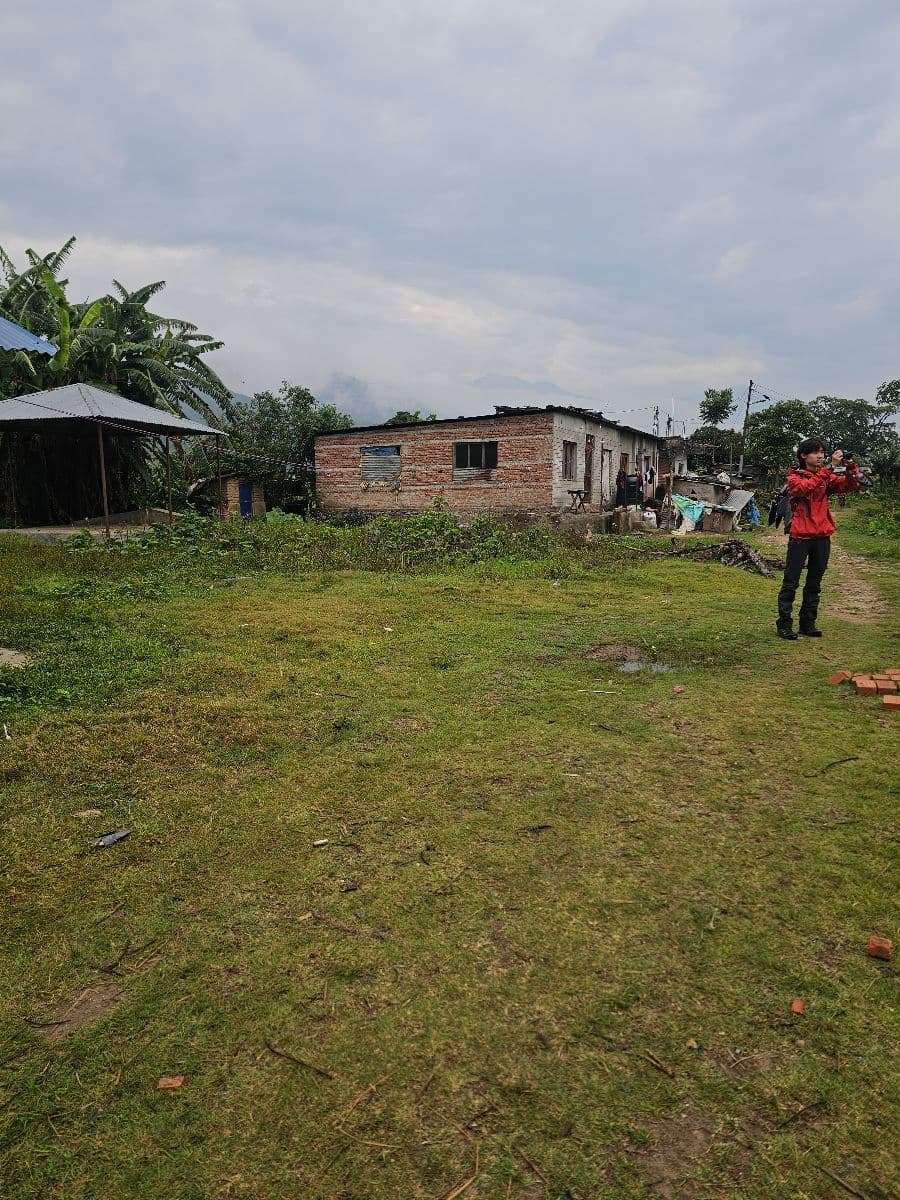
Channethan serves as the starting point and gateway of the trail, strategically situated on the bank of the Tadi River within Panchakanya Rural Municipality Ward No. 1. This area is historically significant as the ancestral home of the Diwas Rai community, who are believed to have inhabited this region even earlier than the local Brahmin and Chhetri populations. According to oral history, these Rai people fled their original lands during the wars involving King Elambar and Jitedasti to protect their families, eventually settling here in a dense, clustered formation (jhuruppa) as a tactical means to remain united and defend themselves against potential enemies. While they share surnames with the Rais of eastern Nepal, local elders note they have distinct physical characteristics and cultural variations. The religious heart of the site is the Chandeshwari Temple, where the Rai community worships its ancestral deity. Traditional rituals at this temple involve animal sacrifices, including roosters during Chandi Purnima, and buffaloes, chickens, and goats during the Dashain festival. Historically, the site was home to the Chandeshwari Primary School, though it has since merged with Indreni Secondary School due to declining enrollment. Currently, Channethan is evolving into an administrative hub with the construction of the Ward No. 1 office located just west of the temple, which is planned to begin operations in the fiscal year 2083-84.
Bhakunne Pipal (592m)
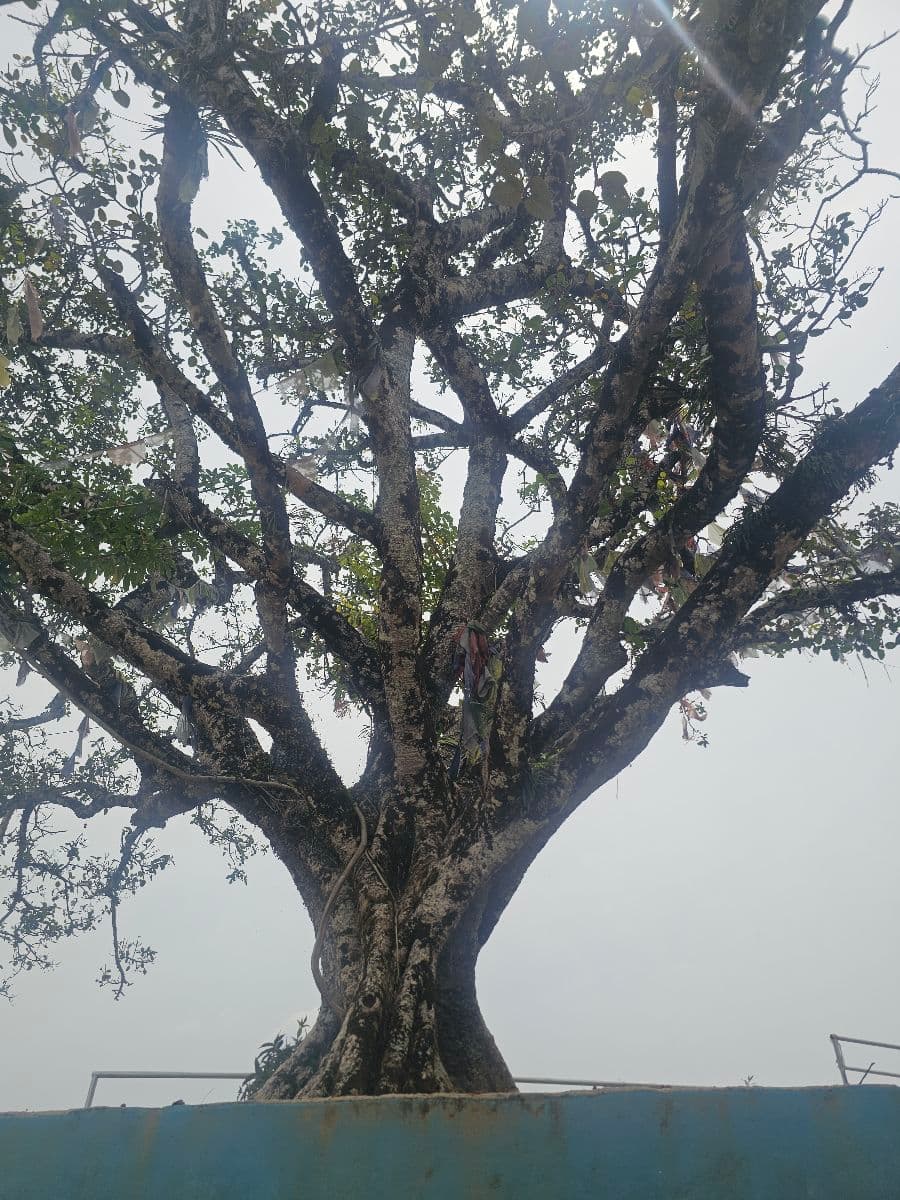
Bhakunne Pipalbot is a massive, historic pipal tree located in the Tanti area, specifically within the Simara locality of Panchakanya Ward No. 1. Its unique name, 'Bhakunne,' is derived from the Nepali word bhakundo, referring to the tree's distinctive and symmetrical round, ball-like shape. The tree was originally planted by Jit Bahadur Rai, the father of current local resident Ramchandra Rai; although the planter has since passed away, the tree remains a living legacy of his contribution to the community.
Historically, this site held immense strategic and social importance as it was situated along the primary foot trail leading to Bidur, the district headquarters of Nuwakot. Travelers and villagers from as far as Dupcheswor and Golfu Bhanjyang would pass through this route, using the tree as a vital resting point during their long journeys to the district center. Perhaps the most captivating historical lore associated with the site involves Dr. K.I. Singh, who famously served as the Prime Minister of Nepal for only 24 hours during the reign of King Mahendra. Local elders recount that when Singh was being pursued by the royal military, he took a brief but crucial rest under this pipal tree before continuing his escape toward Gosaikunda.
While modern road constructions have diverted much of the traditional foot traffic, the tree remains a vital social and environmental landmark for the residents of Simara, Banetar, Kalche, and Pipalgiri. Unlike many other pipal trees in Nepal that are dedicated to specific deities, Bhakunne Pipal serves a secular and practical purpose as a cool sanctuary where local farmers find refuge from the scorching sun and heavy monsoon rains while working in their nearby fields.
Mahankaleswor Temple (605m)
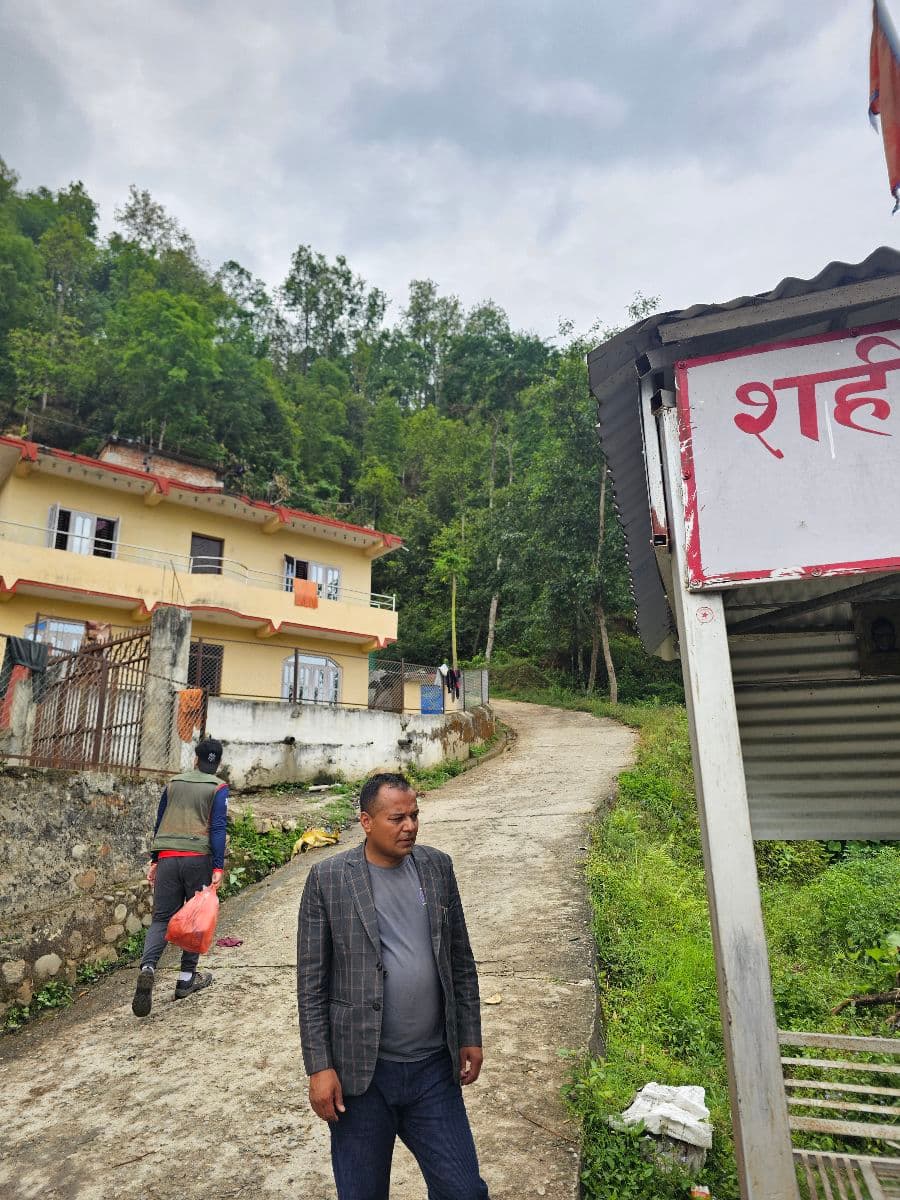
Mahankaleshwor Temple is a site of profound religious and communal significance, deeply rooted in the Swasthani Brata Katha; local tradition holds that it is one of the sacred spots where a part of Sati Devi’s body fell as Lord Shiva traveled the world in his grief. While the exact founder of the temple remains unknown, it serves as a shared spiritual sanctuary for all local ethnic groups, including Brahmins, Chhetris, Rais, Tamangs, and Newars, rather than belonging to any single community. The temple is the center of major activity during the festival of Bala Chaturdashi, when devotees stay awake all night in a ritual vigil (jagram), lighting lamps to honor their deceased ancestors before immersing the lights in a nearby river or stream the next morning. During the month dedicated to Swasthani, the temple also becomes a hub for traditional worship and circumambulation.
Historically, the temple was supported by a Guthi endowment, but much of this land has since been converted to private ownership (raikar), leaving only the temple courtyard itself as public land registered to the deity. Daily rituals were previously conducted by a local priest named Giridhar, who also managed the Gotheshwor Temple in Ward 2; however, following his death, the tradition of regular daily worship has been largely suspended. Notably, the Mahankaleshwor Temple follows a strictly non-violent tradition with no animal sacrifices performed on its grounds. Adding to the site's spiritual landscape, the nearby Satyanarayan Temple was established in 1995 (2052 BS) for Vaishnav followers through the influence of Ram Prapannacharya of Birgunj. This adjacent facility is currently being developed into a residential Gurukul, where children live and receive traditional education.
Chamere Gufa (Siddheshwar Bat Cave) (753m)
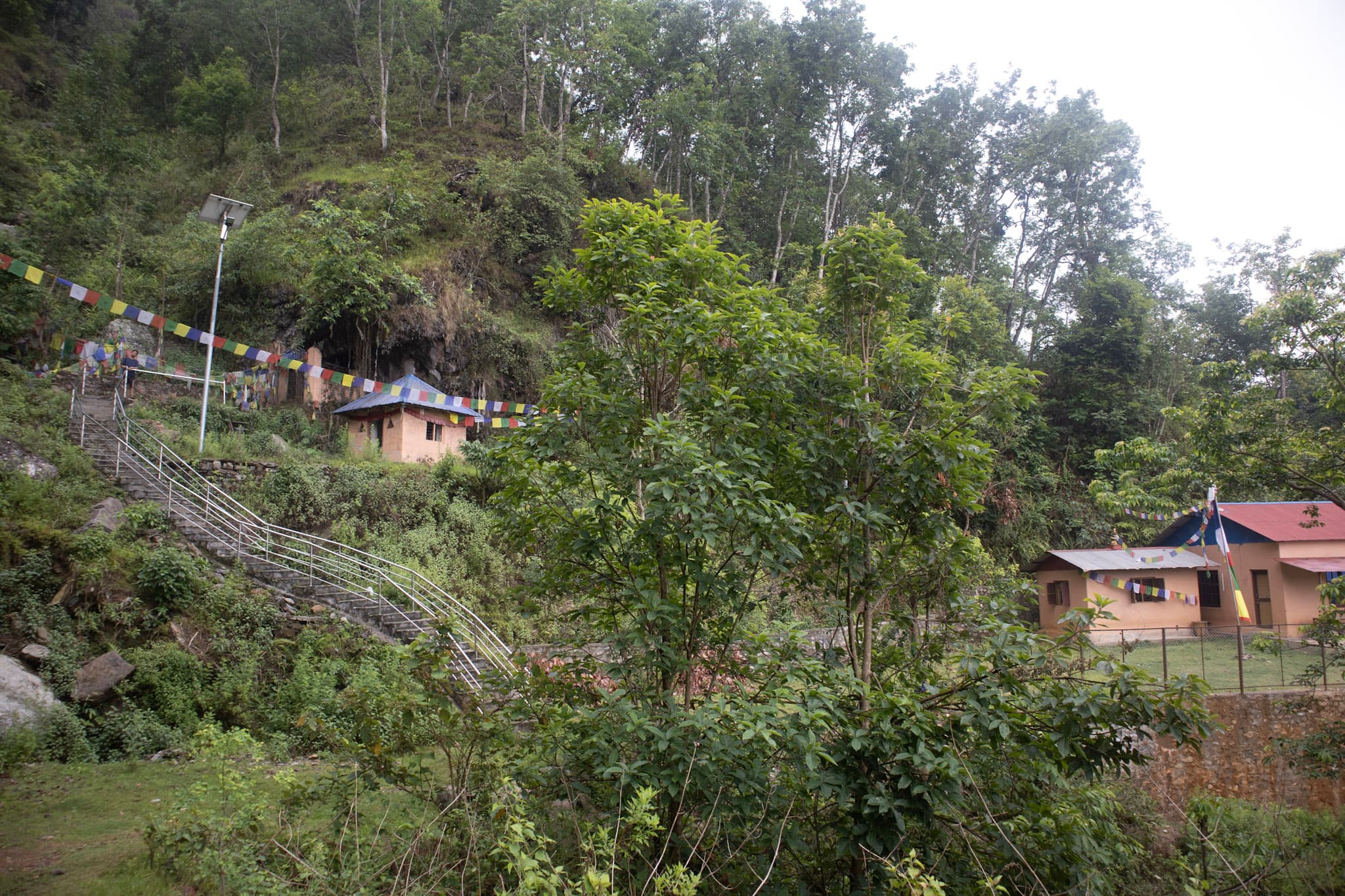
Siddheshwar Chamere Gufa, commonly known as the Bat Cave, is a site of immense historical, religious, and ecological importance located on the border of the former Chaughada VDC Wards 9 and 3, now within Panchakanya Rural Municipality Ward No. 1. The cave is approximately 25 to 30 meters deep and features a complex internal structure; after the first 25 meters, the path splits into narrow upper and lower openings that require visitors to bend or crawl to proceed. Deep inside, the environment is characterized by low oxygen levels and total darkness. True to its name, the cave serves as a massive natural habitat for a species of bats that are notably larger and thicker than common house bats. Local farmers have historically utilized the cave by collecting bat guano to use as a specialized fertilizer to treat and improve the acidity of the soil in their fields.
The cave’s history is dominated by the legend of a Siddha Baba (also referred to as Galeshwor Baba), which occurred around 1933 (1990 BS). According to local accounts, the Siddha arrived at Pandegairi and initiated a Saptaha Gyan Mahayagna. He reportedly performed a miracle by bathing in the Tadi River and using the water to ignite the sacrificial fire. After the ritual, he entered the cave with his disciples; while the disciples remained outside, the Siddha disappeared into the depths. Local tradition, supported by the testimony of elders who were children at the time, holds that he emerged on the other side of the hill in Aapchaur, specifically within the Vanadevi Kalivan Community Forest.
The site holds dual religious significance. For Hindus, it is the abode of Siddheshwar Mahadev, while for Buddhists, it is a major pilgrimage site. Buddhist followers believe that Guru Padmasambhava (Guru Rinpoche) meditated in this cave while traveling to Tibet, a belief that draws 10,000 to 15,000 pilgrims to the site annually. A famous piece of local lore from 40 to 45 years ago tells of a group of foreign visitors who attempted to explore the deep interior of the cave but were blocked by two large sacred serpents (Nagas). Locals interpret this event as divine intervention protecting the sanctity of the shrine from those outside the Hindu and Buddhist faiths.
Today, the cave remains a vibrant center for community and spiritual life. During Bala Chaturdashi, devotees gather to light lamps for the souls of their ancestors, staying awake all night before immersing the lamps in nearby rivers. It is also a popular destination for New Year’s Day visits and special prayers on Mondays during the month of Shrawan. Beyond its religious role, the area around the cave has traditionally been a beloved spot for forest feasts (Van Bhoj), picnics for local youth, and educational outings for nearby school children. Recent development efforts by the provincial and federal governments have added new infrastructure, including buildings and grounds, to better accommodate the growing number of visitors.
Tulke Mane Chautaro and Ridge Temples (852m)
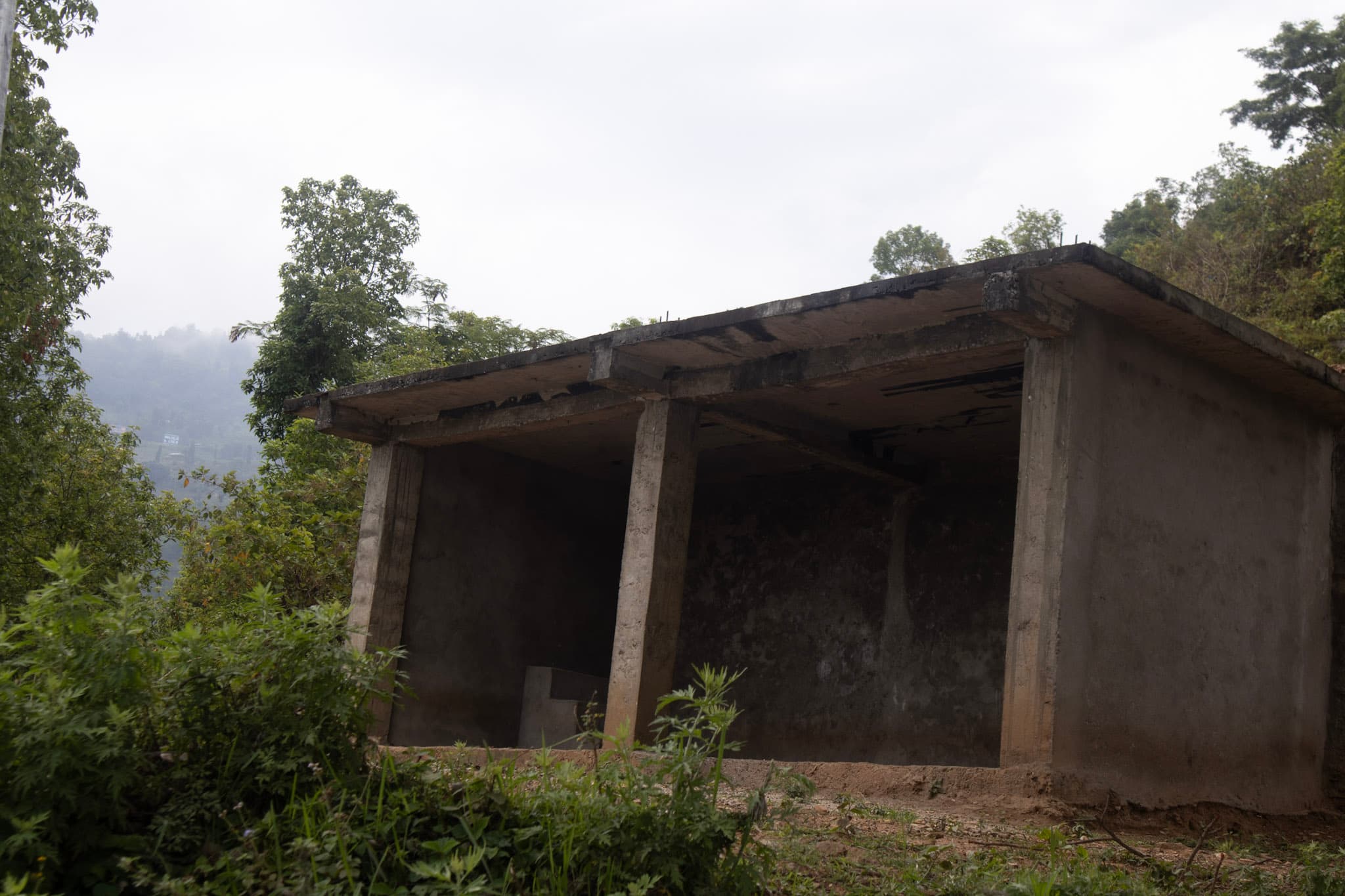
Tulke Mane Chautaro, now increasingly referred to as Pipal Dada, is a historically significant resting platform and geographical landmark situated on the high ridge that defines the border between Panchakanya Rural Municipality Wards 1 and 2. The site derives its original name from a local Tamang man from Ritthechaur nicknamed 'Tulke,' who is credited with planting the massive pipal tree that provides the site’s shade. While Tulke (who was the grandfather of local resident Suresh Tamang) has since passed away, the landmark remains a vital pillar of the community's social and spiritual fabric. For approximately 140 to 150 households of the local Tamang community, the area around the chautaro serves a solemn and essential purpose as a traditional cremation ground (Daas Sanskar).
As a key stop along the trekking trail, the site acts as both a physical resting point for hikers and a gateway to a cluster of nearby spiritual landmarks, including the Ganeshstan, Natyaswari, and Saraswati Temples. The Nateshwori Temple, in particular, is noted for its deep connection to the Newar community and its role as a site for music and dance rituals. Currently, the infrastructure at Tulke Mane Chautaro includes a small one or two-room building, and the local ward administration is actively working to transform the area into a mini park. This development aims to preserve its status as a communal gathering point while enhancing its appeal as a scenic viewpoint for visitors traveling between the Tadi and Likhu rivers.
Kapileshwar Mahadev Temple (Hilltop) (1312m)
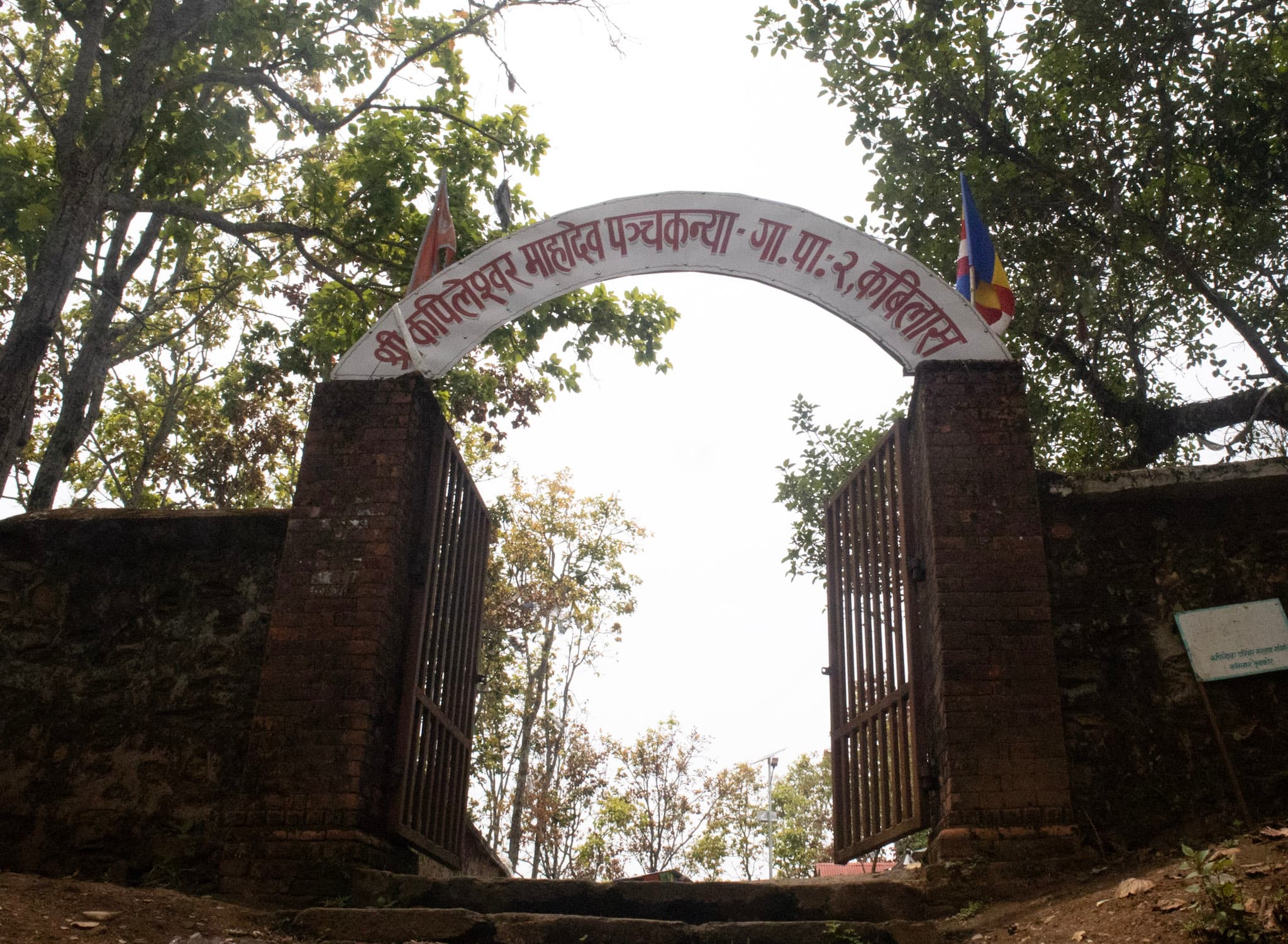
Kapileshwar Mahadev Temple is the highest point of the trekking trail, situated on a prominent hilltop that offers panoramic views of the surrounding landscape. As the spiritual pinnacle of the route, the temple is primarily dedicated to the worship of Lord Shiva (Mahadev). According to the Skanda Purana, the temple was established by Kapil Muni, who is recognized in the scriptures as the third avatar of Lord Vishnu. Legend tells that while searching for a wandering and distressed Mahadev, Kapil Muni arrived at this high peak, where he experienced a divine vision of the Jyotirlinga and subsequently established the Shivalinga now worshipped as Kapileshwar.
The site is also characterized by a significant Gopya Dharma Sabha (Secret Religious Assembly) organized by Brahmaji. During a great war between gods and demons, Brahmaji sought a secluded location to perform a yagna for world peace; Narad Muni identified Kapil Muni’s hut as the most suitable and secret location for this assembly.
Beyond its Hindu roots, the site holds deep meaning for Buddhist followers, as evidenced by a statue of Guru Padmasambhava (Guru Rinpoche) located within the compound. Local tradition speaks of a dialogue between Kapileshwar and the Guru; after the Shivalinga was established, the area was reportedly plagued by 'Sheds' (troublesome spirits or demons). Kapileshwar summoned the tantric master Padmasambhava, who arrived to subdue these entities and assigned protectors to ensure the area remained peaceful before he continued his journey toward Tibet.
The management of the temple is currently overseen by a committee that was formally registered with the District Administration Office in 2068 BS. This committee is recognized by the Guthi Sansthan and undergoes renewal every three years. Historically, the temple was supported by a vast endowment of 377 ropanis and 4 ana of land, an area known as 'Guthi Thok' which once constituted an entire administrative ward. While two-thirds of this land has since been converted to private ownership, the committee continues to collect nominal annual fees from the remaining slope land to fund the temple's operations and the priest's salary. To further its potential as a major religious and tourism hub, a comprehensive Master Plan (Guru Yojana) has been developed in coordination with the Rural Municipality.
Brahmeswor Temple and Likhu River (680m)
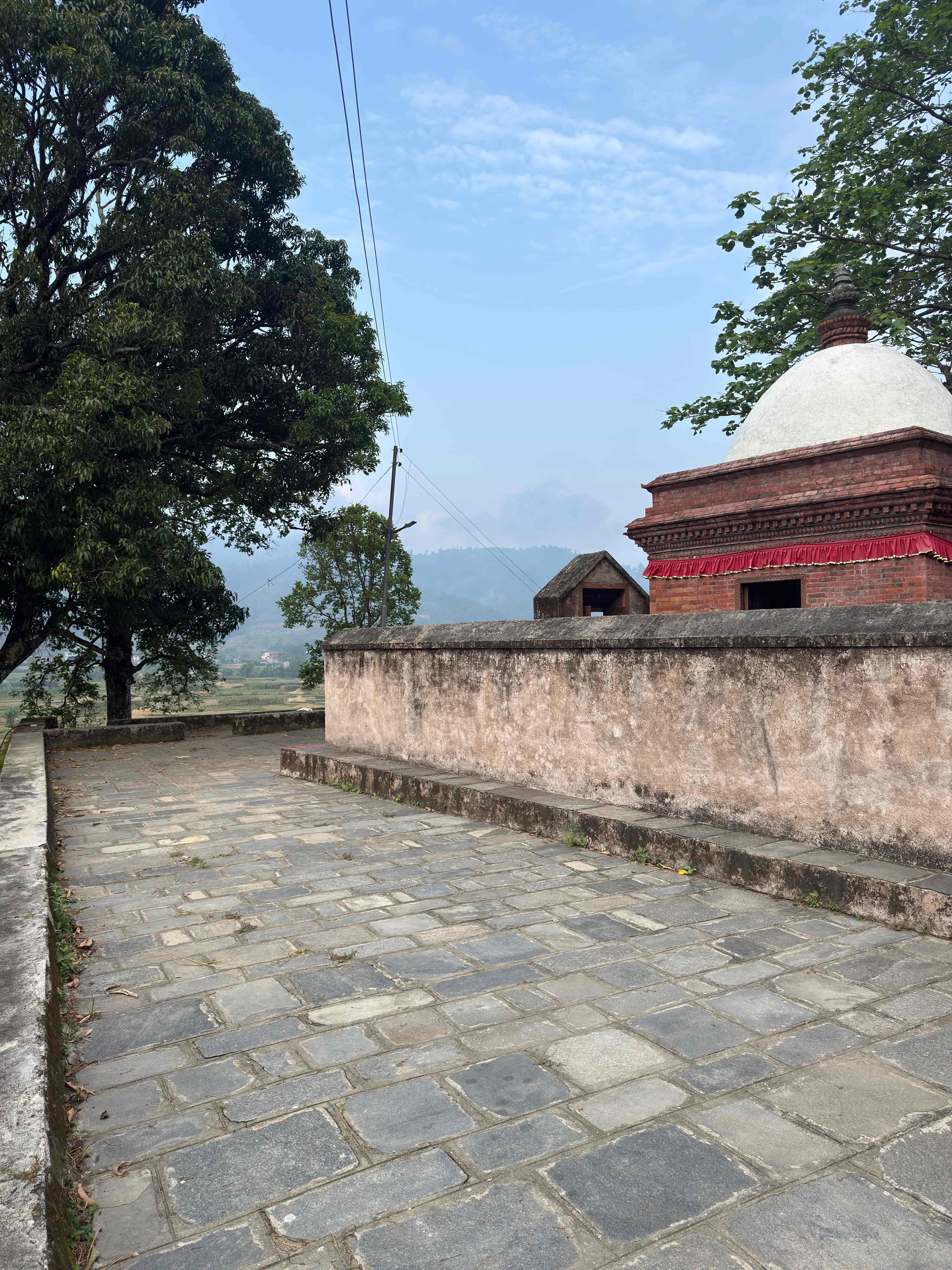
Brahmeshwar Temple serves as the final major landmark and the concluding point of the trekking trail, situated near the banks of the Likhu River. Drawing from the rich mythological and administrative details provided in the sources, here is a comprehensive report on the site:
Physical and Geographical Context
Unlike many other religious sites along the trail, Brahmeshwar does not feature a formal temple building. Instead, the sacred site is marked by a four-faced (Chaturmukh) Shivalinga or sacred stone (shila). Geographically, it sits within a region traditionally known as the Brahma Kshetra, located at the end of the descent from the hilltop.
Mythological Significance: The Brahma Kshetra
According to local lore shared by Lokendra Mahat, the site’s history dates back to an ancient war between the gods and demons. Brahmaji arrived in this area to perform a grand yagna (sacrificial ritual) dedicated to world peace. However, when demons began disrupting the ritual, Brahmaji ordered Narad Muni to find a 'secret' location where a religious assembly could be held without interference. This led to the establishment of the Gopya Dharma Sabha at the hilltop (Kapil Muni’s hut), but the initial ground where Brahmaji first arrived and performed his rituals remains recognized as Brahmeshwar.
The Legend of Rakshasheshwar and Rawan
Brahmeshwar is intrinsically linked to the nearby site of Rakshasheshwar. During the secret assembly at the hilltop, a figure disguised as a devotee of Shiva arrived, demanding to see Brahmaji. Brahmaji, wishing to neither insult a guest nor compromise the secrecy of the assembly, ordered Narad Muni to keep the visitor at a respectful distance near the entrance of the Brahma area.Narad Muni brought the visitor to a spot near Brahmeshwar and used water from a kamandalu (sacred water pot) to reveal the stranger's true identity: it was the demon king Rawan. Because Rawan—a great scholar and Shiva devotee—had stayed there, the spot was named Rakshas-eshwar (the Lord of the Demon), which is now often referred to as Rakshasheshwar.
Religious and Ritual Traditions
The primary deity worshipped at both Brahmeshwar and the adjacent Rakshasheshwar is Lord Shiva. The area is managed by the Rakshasheshwar Guthi (management committee). Historically, the land around these temples was considered highly valuable and was eventually registered under a government system (raitan).Today, the management of the temple and the priest's salary are funded through the interest generated by an endowment fund (Akshaya Kosh). This fund combines resources from the central Guthi Sansthan and a separate fund established by the local management committee.
Ecological Significance
As the terminus of the trail, the site highlights the ecological importance of the Likhu River. The documentation of this site aims to showcase how the natural landscape of the riverbanks is deeply intertwined with these ancient religious traditions, making it a vital point for both spiritual and environmental tourism.